
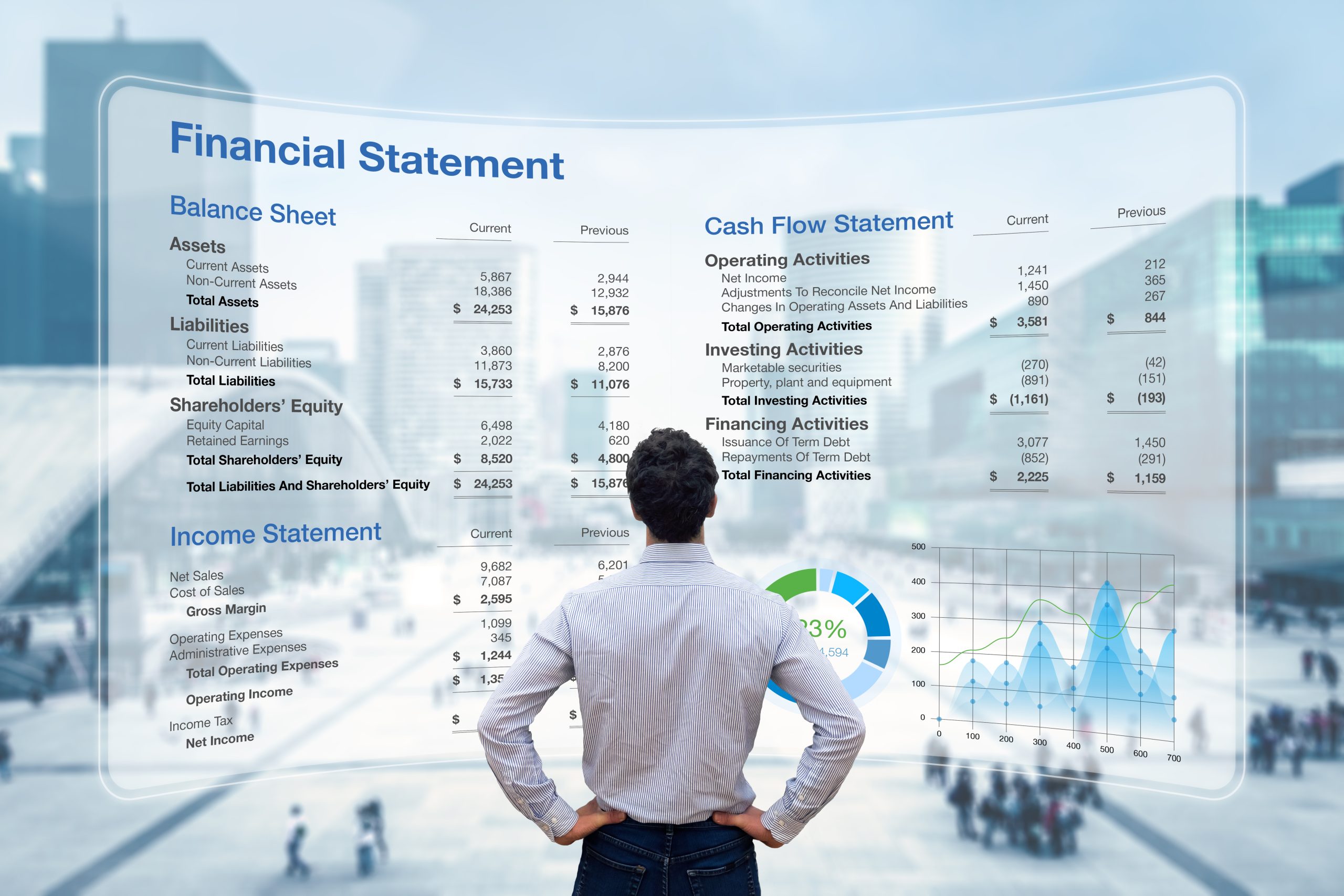
Welcome to Understanding Financial Statements
In this module, we will focus on the key financial documents every credit analyst must understand: Financial Statements, Management Accounts, and Tax Returns. These documents provide insights into a client’s trading performance, liquidity, solvency and debt servicing capacity key elements for assessing their creditworthiness. A strong understanding of these financial reports will help you spot trends, assess risk, and make better credit recommendations.
Building on the foundations established in the Accounting Concepts Module, this module focuses on how financial data is structured, interpreted, and applied in real-world financial analysis completed by credit analysts.
What to expect in this module
You will work through real-world commercial lending scenarios that demonstrate how these key financial documents form the foundation of effective financial analysis.
Through practical examples, hands-on exercises, and credit focused case studies, you will learn to:
- Understand the structure and purpose of financial statements, management accounts, and tax returns.
- Identify how financial data reveals a client’s trading performance, liquidity, and solvency.
- Apply financial insights to understand relevance to debt servicing capacity and creditworthiness.
- Build confidence in reading financial reports to help you make sound credit recommendations.
How you will learn
At the end of this module, you will complete a set of final questions that will test your ability to:
- Recognise the key components and structure of financial statements.
- Understand how these financial statements play their part in reflecting client’s trading performance and financial stability.
- Build confidence in reading and navigating financial statements with a credit analyst focus lens.
Current Status
Price
Get Started
Module Content
- Mentor feedback is provided only after all Review Questions for the entire module have been completed, not after individual topics. Feedback will be delivered through the Review Questions Summary.
- You may update your Review Question responses at any time. If you choose to reattempt the Review Questions for a specific topic, your previous responses will not be visible and you will be required to answer all questions for that topic again.
- If you prefer not to reattempt individual topics, you can instead update your responses via the Review Questions Summary.
- From there, you can download all of your responses, review and edit them as needed, and re upload the document for mentor review.
- Once the mentors are satisfied with your responses across all Review Questions in the module, you will be progressed and granted access to the Final Questions and Exercise(s).
Need technical support?
If you run into any issues on the website, get in touch with our technical team at @creditanalystacademy.com
- Mentor feedback is provided only after all Review Questions for the entire module have been completed, not after individual topics. Feedback will be delivered through the Review Questions Summary.
- You may update your Review Question responses at any time. If you choose to reattempt the Review Questions for a specific topic, your previous responses will not be visible and you will be required to answer all questions for that topic again.
- If you prefer not to reattempt individual topics, you can instead update your responses via the Review Questions Summary.
- From there, you can download all of your responses, review and edit them as needed, and re upload the document for mentor review.
- Once the mentors are satisfied with your responses across all Review Questions in the module, you will be progressed and granted access to the Final Questions and Exercise(s).
Need technical support?
If you run into any issues on the website, get in touch with our technical team at @creditanalystacademy.com
- Mentor feedback is provided only after all Review Questions for the entire module have been completed, not after individual topics. Feedback will be delivered through the Review Questions Summary.
- You may update your Review Question responses at any time. If you choose to reattempt the Review Questions for a specific topic, your previous responses will not be visible and you will be required to answer all questions for that topic again.
- If you prefer not to reattempt individual topics, you can instead update your responses via the Review Questions Summary.
- From there, you can download all of your responses, review and edit them as needed, and re upload the document for mentor review.
- Once the mentors are satisfied with your responses across all Review Questions in the module, you will be progressed and granted access to the Final Questions and Exercise(s).
Need technical support?
If you run into any issues on the website, get in touch with our technical team at @creditanalystacademy.com
- Mentor feedback is provided only after all Review Questions for the entire module have been completed, not after individual topics. Feedback will be delivered through the Review Questions Summary.
- You may update your Review Question responses at any time. If you choose to reattempt the Review Questions for a specific topic, your previous responses will not be visible and you will be required to answer all questions for that topic again.
- If you prefer not to reattempt individual topics, you can instead update your responses via the Review Questions Summary.
- From there, you can download all of your responses, review and edit them as needed, and re upload the document for mentor review.
- Once the mentors are satisfied with your responses across all Review Questions in the module, you will be progressed and granted access to the Final Questions and Exercise(s).
Need technical support?
If you run into any issues on the website, get in touch with our technical team at @creditanalystacademy.com
- Mentor feedback is provided only after all Review Questions for the entire module have been completed, not after individual topics. Feedback will be delivered through the Review Questions Summary.
- You may update your Review Question responses at any time. If you choose to reattempt the Review Questions for a specific topic, your previous responses will not be visible and you will be required to answer all questions for that topic again.
- If you prefer not to reattempt individual topics, you can instead update your responses via the Review Questions Summary.
- From there, you can download all of your responses, review and edit them as needed, and re upload the document for mentor review.
- Once the mentors are satisfied with your responses across all Review Questions in the module, you will be progressed and granted access to the Final Questions and Exercise(s).
Need technical support?
If you run into any issues on the website, get in touch with our technical team at @creditanalystacademy.com
- Mentor feedback is provided only after all Review Questions for the entire module have been completed, not after individual topics. Feedback will be delivered through the Review Questions Summary.
- You may update your Review Question responses at any time. If you choose to reattempt the Review Questions for a specific topic, your previous responses will not be visible and you will be required to answer all questions for that topic again.
- If you prefer not to reattempt individual topics, you can instead update your responses via the Review Questions Summary.
- From there, you can download all of your responses, review and edit them as needed, and re upload the document for mentor review.
- Once the mentors are satisfied with your responses across all Review Questions in the module, you will be progressed and granted access to the Final Questions and Exercise(s).
Need technical support?
If you run into any issues on the website, get in touch with our technical team at @creditanalystacademy.com
- Mentor feedback is provided only after all Review Questions for the entire module have been completed, not after individual topics. Feedback will be delivered through the Review Questions Summary.
- You may update your Review Question responses at any time. If you choose to reattempt the Review Questions for a specific topic, your previous responses will not be visible and you will be required to answer all questions for that topic again.
- If you prefer not to reattempt individual topics, you can instead update your responses via the Review Questions Summary.
- From there, you can download all of your responses, review and edit them as needed, and re upload the document for mentor review.
- Once the mentors are satisfied with your responses across all Review Questions in the module, you will be progressed and granted access to the Final Questions and Exercise(s).
Need technical support?
If you run into any issues on the website, get in touch with our technical team at @creditanalystacademy.com
- Mentor feedback is provided only after all Review Questions for the entire module have been completed, not after individual topics. Feedback will be delivered through the Review Questions Summary.
- You may update your Review Question responses at any time. If you choose to reattempt the Review Questions for a specific topic, your previous responses will not be visible and you will be required to answer all questions for that topic again.
- If you prefer not to reattempt individual topics, you can instead update your responses via the Review Questions Summary.
- From there, you can download all of your responses, review and edit them as needed, and re upload the document for mentor review.
- Once the mentors are satisfied with your responses across all Review Questions in the module, you will be progressed and granted access to the Final Questions and Exercise(s).
Need technical support?
If you run into any issues on the website, get in touch with our technical team at @creditanalystacademy.com
- Mentor feedback is provided only after all Review Questions for the entire module have been completed, not after individual topics. Feedback will be delivered through the Review Questions Summary.
- You may update your Review Question responses at any time. If you choose to reattempt the Review Questions for a specific topic, your previous responses will not be visible and you will be required to answer all questions for that topic again.
- If you prefer not to reattempt individual topics, you can instead update your responses via the Review Questions Summary.
- From there, you can download all of your responses, review and edit them as needed, and re upload the document for mentor review.
- Once the mentors are satisfied with your responses across all Review Questions in the module, you will be progressed and granted access to the Final Questions and Exercise(s).
Need technical support?
If you run into any issues on the website, get in touch with our technical team at @creditanalystacademy.com
- Mentor feedback is provided only after all Review Questions for the entire module have been completed, not after individual topics. Feedback will be delivered through the Review Questions Summary.
- You may update your Review Question responses at any time. If you choose to reattempt the Review Questions for a specific topic, your previous responses will not be visible and you will be required to answer all questions for that topic again.
- If you prefer not to reattempt individual topics, you can instead update your responses via the Review Questions Summary.
- From there, you can download all of your responses, review and edit them as needed, and re upload the document for mentor review.
- Once the mentors are satisfied with your responses across all Review Questions in the module, you will be progressed and granted access to the Final Questions and Exercise(s).
Need technical support?
If you run into any issues on the website, get in touch with our technical team at @creditanalystacademy.com
Learning Objectives
By the end of this module, you will be able to:
Understand Key Financial Statements
Gain a solid understanding of the purpose, structure, and interpretation of the Statement of Profit or Loss, Statement of Financial Position, Statement of Cash Flows.
Understand how each statement helps assess a client’s financial strength, sustainability, and overall creditworthiness.
Interpret Financial Disclosures
Recognise the role of notes to financial statements, which provide context and transparency being reported figures.
Understand how these disclosures reveal risks that may affect a client’s debt servicing capacity and creditworthiness.
Assess the Type of Financial Reporting
Differentiate between General Purpose Financial Statements (GPFS) and Special Purpose Financial Statements (SPFS).
Understand how the type and quality of reporting influence the reliability of data used in financial analysis and lending decisioning.
Use Management Accounts in Financial Analysis
Understand what management accounts are and how they complement statutory financial statements.
Learn how comparing management accounts with statutory financial statements can help you identify performance trends, identify discrepancies, and detect earning warnings of financial stress.
Use Financial Data to Make Sound Credit Recommendations
Integrate insights obtained from financial statements, management accounts, and tax returns to form a complete financial view .
Use this analysis to support credit recommendations, assign appropriate risk grades, and structure loan facilities and covenants that are aligned with the client’s financial capacity and the lender’s risk appetite.